
Top Signs You Need Air Duct Cleaning Service – Don’t Ignore These
Dust on your vent covers is your duct system telling you it has a problem it’s had for two years. Here are the signals that show up before the visible ones.
The signs most homeowners wait for – dusty registers, a musty smell – are late-stage indicators. By the time you can see contamination on a vent cover, debris has been cycling through your system for a while. What you want are the early signals: the subtle changes in how your home heats, how fast your filters load, and when your allergy symptoms hit. Those show up months before the visible mess, and they’re the ones worth acting on.
Below, we walk through what’s actually happening inside your ducts and how to read the early warnings. If you’d rather skip the detective work and get a professional eye on things, call (833) 509-3011. We answer 24/7 and offer free estimates.
Key Takeaways
- Uneven heating and cooling between rooms is often a duct contamination signal, not an HVAC capacity problem.
- A MERV-8 filter loading visibly in under three weeks means your duct system is shedding debris upstream.
- Allergy symptoms that track your HVAC run cycles – not the pollen calendar – point to indoor duct contamination.
- Post-renovation dust needs handling within six months, or it starts degrading flex duct liner.
- Professional equipment matters: Rotobrush and Nikro systems capture what a shop vac can’t.
Uneven Room-to-Room Heating or Cooling Is a Duct Signal
If one room in your Kirkland home is always a few degrees off from the rest, the first instinct is a weak furnace or undersized AC. Most of the time, it’s neither. Uneven temperatures are one of the earliest duct contamination indicators, and they usually show up before any dust is visible.
Here’s why. Duct systems are designed to move a specific volume of air at a specific static pressure. When debris builds up on duct walls, in the return plenum, or along flex runs, that pressure changes. Obstruction narrows the pathway, so air that should reach the far bedroom gets throttled back. The room that was always comfortable starts running a little cool in winter and a little warm in summer.
What to check without any equipment:
- Close a register in the problem room and feel the airflow – weak push suggests restriction upstream.
- Compare the register grill temperature in the problem room to a known-good room during a heating or cooling cycle.
- Listen for a whistling or strained sound at the register – that’s restricted airflow working harder than it should.
- Check whether the problem appeared gradually over months rather than all at once.
A sudden change often points to a mechanical fault – a damper, a failed component. A slow drift toward unevenness points to contamination building up. Both are worth a look, but only one is solved by cleaning. Our technicians have up to 9 years of experience reading these signals, and a quick inspection during a visit to your home can tell you which category you’re in.
Your Filter Loading Rate Tells You What’s Happening Upstream
Filter loading rate is the most underused diagnostic tool a homeowner has. A standard MERV-8 filter is designed to last a few months under normal conditions. If yours is loading visibly in under three weeks, the duct system upstream is shedding debris – and the filter is catching it before it reaches your lungs and your blower.
Think of the filter as a downstream witness. Every particle it traps had to come from somewhere in the system. A clean duct system produces a slowly greying filter. A contaminated one produces a filter that turns brown or grey in a matter of weeks, sometimes with visible hairs, fiberglass strands, or drywall dust caked across the pleats. We’ve seen filters in Kirkland homes that were almost completely blocked within a month of installation – that’s a duct system actively depositing material, not just catching airborne dust.
What to do with this signal:
- Note the date you install a new filter and check it at two weeks. Photograph it.
- If it’s visibly discolored at two weeks, the duct system is the source, not outdoor air.
- A filter caked with white dust is often drywall or insulation debris from a past renovation.
- A filter with dark fibrous material can signal degrading flex duct liner.
Before you burn through another case of filters, get the source addressed. That’s what a professional air duct cleaning service is for – removing the deposit at the source rather than filtering it downstream.
Not All Smells Are “Musty” – Learn the Difference
“Musty” is a category, not a diagnosis. In our experience across Kirkland homes, that single word can describe at least three very different problems, and each one points to a different treatment:
- Biofilm: A sour, wet-cloth smell that intensifies when the system first turns on. This usually points to a moisture issue inside the duct or on the cooling coil, where microbes have colonized the damp surfaces.
- Rodent debris: A sharper, ammonia-tinged odor, sometimes with rustling or scratching heard through the return. If you smell this near a return vent, treat it as a contamination and entry-point problem, not just a cleaning job.
- Mold: A heavy, earthy smell strongest in the room closest to the air handler. Mold needs moisture, so finding the smell also means finding the water source feeding it – often condensate or a poorly sealed duct in a humid crawl space.
The common thread is that “musty” alone doesn’t tell you how to fix it. A professional inspection does. When we sanitize, we use Guardsman-grade protective treatments to address microbial growth after cleaning, and we look for the moisture source so the smell doesn’t return in a month. Cleaning around a problem without finding the source is the most common reason homeowners end up frustrated with the whole category of service.
If you’re noticing a smell and want a straight answer, call (833) 509-3011. An estimate is free, and you’ll get a specific diagnosis rather than a guess.
Allergy Symptoms That Track Your HVAC Cycles, Not the Season
Seasonal allergies follow the calendar. Duct-related symptoms follow your thermostat. If your eyes itch, your nose runs, or you wake congested on the mornings after a long heating cycle – but feel clearer on mild days when the system barely runs – the source is likely inside the ducts, not outside.
That pattern is the tell. Outdoor pollen exposure hits everyone in Kirkland on the same days. Indoor duct contamination hits when the system moves air through a contaminant reservoir and delivers it into your living space. If a family member is fine on a spring hike and congested on the couch after the furnace has been running for an hour, the correlation is worth listening to.
Other pattern clues we look for:
- Symptoms that are worst in bedrooms with the closest return vents.
- Symptoms that improved during a vacation away from home, then returned within a day of coming back.
- Pet-allergic family members reacting more in the rooms where pets spend the most time near returns.
None of that proves contamination on its own. But it makes ducts the top suspect. A visual inspection with proper lighting and a scope settles the question quickly, and it’s a service we can schedule without a lengthy diagnostic process. If your home runs hot on baking-day afternoons or dry through the winter, indoor air quality work also matters – ask about the Honeywell and Aprilaire options in our Kirkland Air Duct Cleaning Pros lineup of system upgrades.
Post-Renovation: The Six-Month Clock on Drywall Dust
Renovation dust is a time-based trigger, and most homeowners underestimate it. Drywall sanding, insulation removal, and framing all produce fine particulate that settles into duct work through open registers and returns. Left unaddressed, that material doesn’t sit still. It accumulates on flex duct liner, and over roughly six months, it starts bonding to the liner surface and can degrade the material itself – which then sheds into the airstream.
The result is a compounding problem. Dust from month one feeds the filter. Dust from month three starts clogging the liner. Dust from month six has become a permanent reservoir that no filter change is going to solve. If your renovation finished recently, checking the ducts now is far cheaper than checking them in a year.
What to watch for after a renovation in Kirkland:
- Visible white or grey dust inside the first foot of any duct run you can reach with a flashlight.
- A filter that loads quickly within weeks of the project’s finish.
- New respiratory irritation for family members who were fine before the project started.
- Any duct system where the renovation happened with registers left open, even briefly.
Larger renovation projects that disturbed known contaminants – older insulation, old drywall with unknown additives – deserve a professional scope. When we clean after a renovation, we run Abatement Technologies air-filtration equipment during the job to capture dislodged material before it settles elsewhere in the home. That’s a step consumer-grade vacuums can’t replicate, and it’s why we treat this category of job with more care than a routine maintenance clean.
Why the Equipment Matters More Than You’d Think
Early diagnosis is only useful if the cleaning that follows actually removes what’s been identified. This is where duct cleaning services vary enormously, and it’s worth knowing the difference before you book.
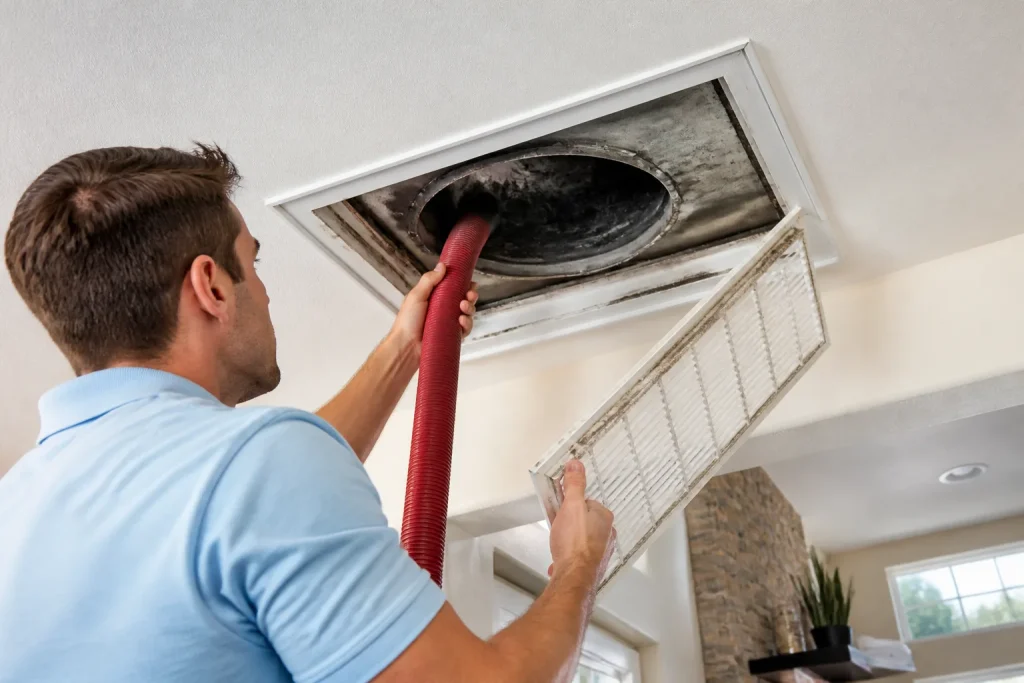
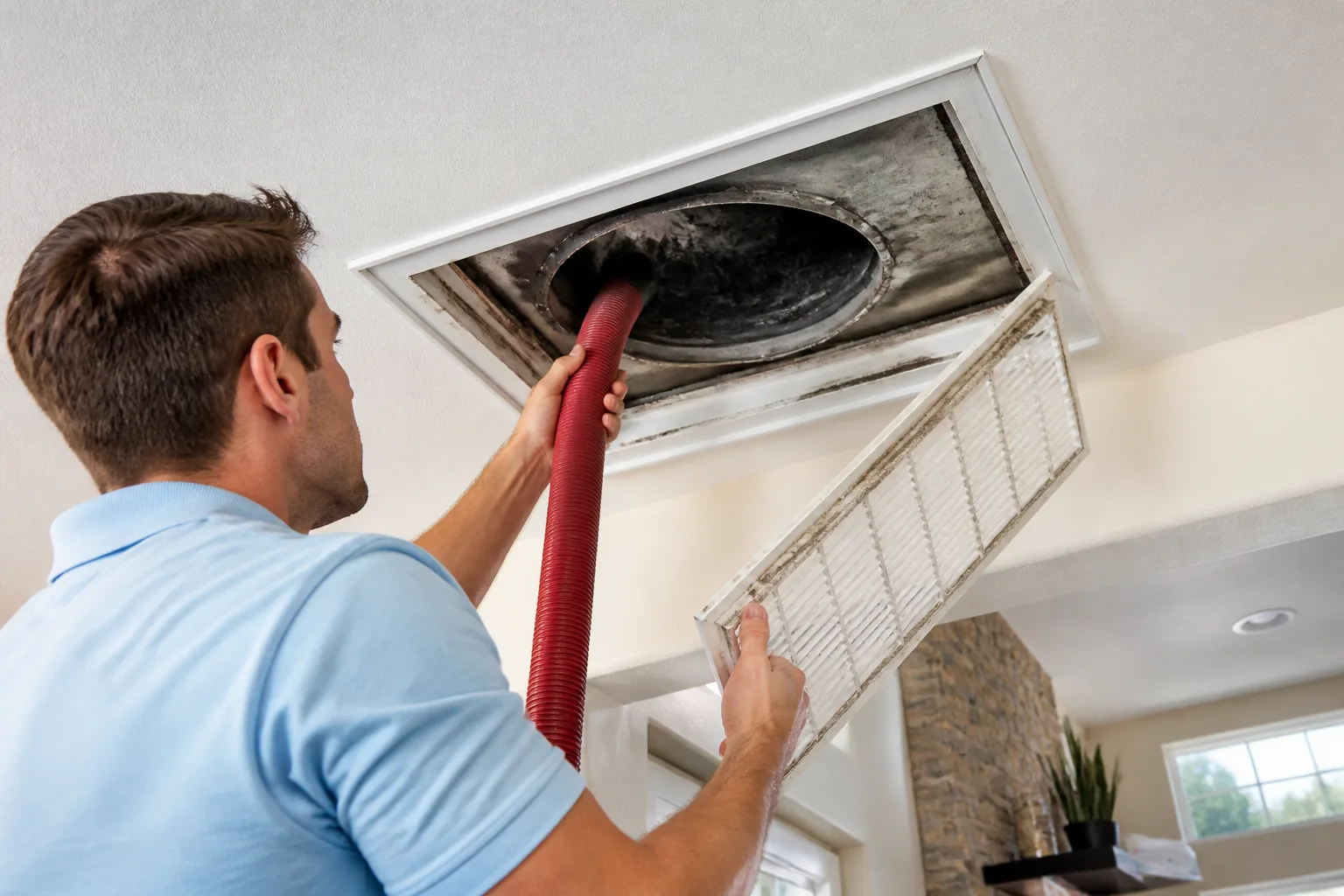
Consumer vacuums and shop vacs move air but don’t have the agitation, negative pressure, or containment to lift and trap debris from an interior duct wall. A professional Rotobrush or Nikro system uses a rotating brush that reaches duct walls and a high-powered vacuum that pulls material out of the system entirely. We run these on every job, and we pair them with Abatement Technologies filtration in the home to keep the air clean while the work happens. The result is a measurable drop in filter loading rate afterward – not a promise that the ducts are “cleaner.”
We also repair what we find, not just clean around it. Duct Repair & Sealing is part of our HVAC cleaning scope because a system that leaks air isn’t really clean – unfiltered air comes straight in through gaps. And for the exhaust side of the system, dryer vent cleaning is a separate fire hazard worth checking alongside duct work. From intake to exhaust – every air pathway, one company.
The Bottom Line
The signs worth acting on in Kirkland are the early ones: uneven room temperatures, filters loading fast, a smell you can describe more specifically than “musty,” allergy symptoms that follow the HVAC cycle, and any renovation finished within the last year. If two or more of those apply, have your system inspected before the visible dust catches up.
If you’re in Kirkland and need help, Kirkland Air Duct Cleaning Pros offers free estimates – call (833) 509-3011. We answer 24/7, with fast dispatch from 7am to 7pm, Sunday through Friday. One flat price per system agreed before work starts, and before-and-after photos of your own ducts when we’re done.
Frequently Asked Questions
Most homes do fine with a professional cleaning every few years, but the honest answer is that it depends on the home, not a fixed schedule. Pet-heavy homes, homes near ongoing construction, and homes that have never been serviced need it sooner. If your filters load in under three weeks or room temperatures have drifted apart, the schedule doesn’t matter as much as addressing what’s happening now. Call (833) 509-3011 for an exact quote – estimates are free.
Pricing in Kirkland typically runs from a few hundred dollars for a straightforward single-system home to more for larger homes, multiple systems, or jobs that include duct repair and sealing. We quote per system, not per vent, and we set the price in a written estimate before any work begins. That’s the number you pay. Call (833) 509-3011 for an exact quote – estimates are free.
Cheap quotes usually come from one of three things: a shop vac instead of professional equipment, a per-vent teaser price that balloons once the technician is on site, or equipment that stirs up debris without capturing it. We use Rotobrush and Nikro systems on every job, quote per system, and photograph the ducts before and after. If the low bid doesn’t include those, it isn’t the lower price. Call (833) 509-3011 for an exact quote – estimates are free.
Ask for before-and-after photos of your own ducts. Any legitimate contractor should be able to show you what the inside of the system looked like before and after the clean, and the reduction in filter loading rate in the weeks that follow is a secondary confirmation. We provide photos as part of every job. Call (833) 509-3011 for an exact quote – estimates are free.
Written by the team at Kirkland Air Duct Cleaning Pros.
Need Air Duct Cleaning Help?
Call Kirkland Air Duct Cleaning Pros - the local pro we connect you with is licensed and insured, here with fast help in Kirkland.
(833) 509-3011