
Last updated November 25, 2026
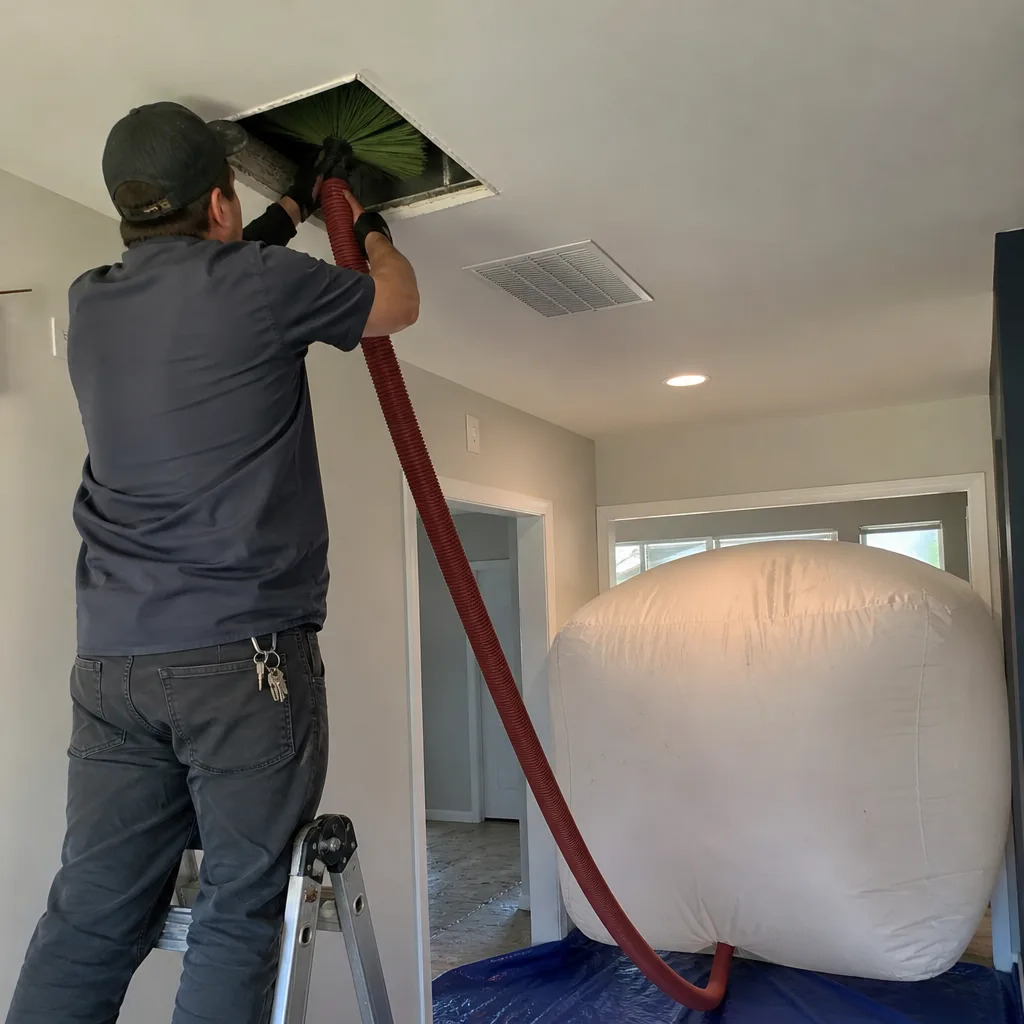
 Whole-home duct cleaning
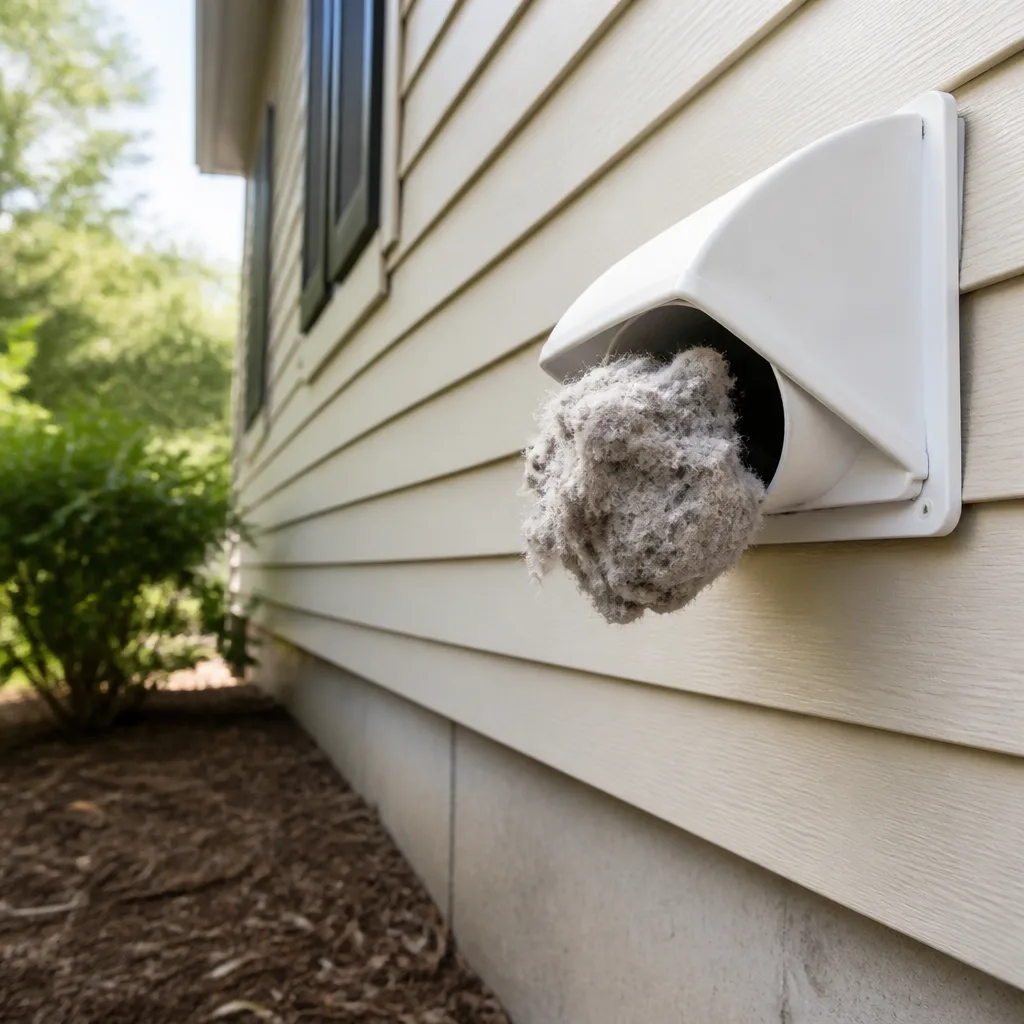 Dryer vent cleaning
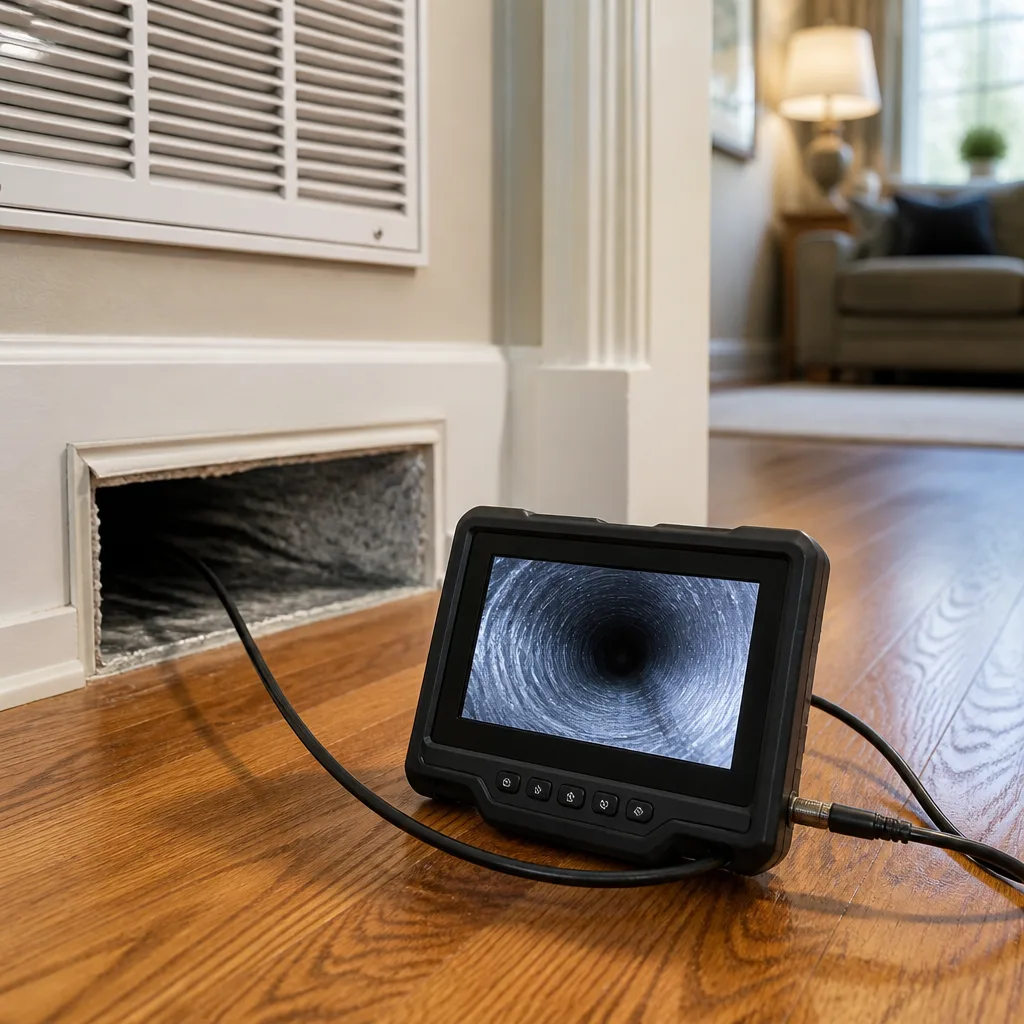 Camera inspection
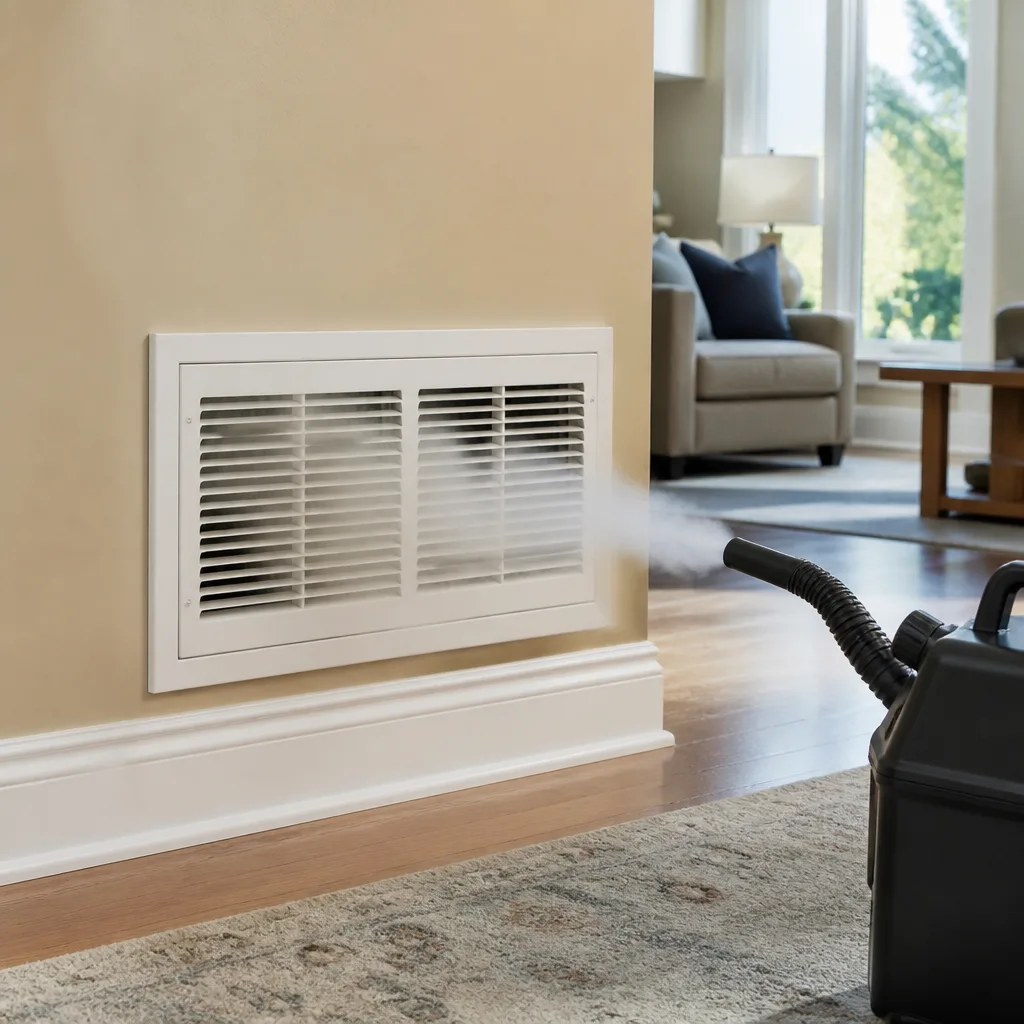 Sanitizing & deodorizing
Whole-system duct and dryer vent check with before-and-after photos - you see exactly what came out of your vents
That "$99 whole-house special" is a bait ad - the real number appears once they are in your hallway, or the "clean" is a shop-vac at the register. We photograph the inside of your ducts before and after instead.
Air Duct Cleaning Cost Breakdown: The Kirkland Homeowner’s Reference for 2026
A $150 quote to clean every duct in a Kirkland house should make you ask questions, not reach for your wallet. A proper source-removal job in an average 2,000 square foot home takes hours of equipment runtime alone, so a number that low tells you the scope is thin or the price will grow once the tech is inside. The market swings from those teaser quotes up past $800 for full-system work, and the gap isn’t profit margin. It’s methodology, equipment and scope. This guide breaks down every line item on a legitimate invoice, explains what each one actually buys, and shows you how to compare three Kirkland quotes on equal terms.
Quick Answer
Air duct cleaning in Kirkland typically runs $350 to $700 for a standard home system in 2026, with larger homes, multiple HVAC zones and heavy contamination pushing toward $800 or more. Legitimate work is priced per whole system, not per vent, and the written estimate should list each step: inspection, negative-pressure setup, mechanical agitation, debris extraction, sanitizing and a final report. If a quote arrives without those line items, you’re not comparing the same job.
Styles & brands we work with
- Whole-home duct cleaning
- Dryer vent cleaning
- Camera inspection
- Sanitizing & deodorizing
Table of Contents
- Per-vent pricing vs. whole-system flat rate
- What each line item on a legitimate invoice means
- Kirkland market rates for 2026 by home size and system type
- Legitimate add-ons vs. upsells you should question
- How to get three quotes that measure the same job
- Why equipment choice shows up in the price
- What makes a Kirkland home’s duct system different
- How to know the work was actually done
Per-Vent Pricing vs. Whole-System Flat Rate: Which Is More Honest?
A whole-system flat rate is the more transparent model, because it matches how the work is actually performed. The equipment doesn’t clean one vent at a time. A crew sets up a negative-pressure source at the main trunk, seals the registers, and works the whole system as one connected pressure zone. Pricing per vent is a way to turn your duct count into a variable you didn’t budget for.
Here’s how to test a per-vent quote for realism. Count the supply registers and return grilles in your home first. Write the number down before anyone visits. Then run the math: if a company charges per vent and the total lands well below $300 for a whole house, the per-vent number is a loss leader, not a price. Expect a revised scope once the technician is standing in your hallway. That revision is where the industry’s bait-and-switch reputation comes from, and it’s the reason we quote one flat price per system and agree it before work starts.
A flat rate also protects you when the job turns out to be simpler than expected. If the inspection finds light dust and a clean trunk line, you’ve bought the scope you were quoted, not a per-unit charge that assumed the worst case. The written estimate sets the final number in either direction. That’s the difference between a price and an opening bid.
What Each Line Item on a Legitimate Invoice Actually Means
A legitimate duct cleaning invoice reads like a procedure record, not a menu. Each line should correspond to a physical step in the job and, ideally, to a photo you can look at afterward. Here’s how a proper job breaks down, step by step:
- Inspection. The technician opens registers, checks the plenum and takes a look at the trunk line and accessible branches. This step establishes what the system actually needs and catches broken joints or disconnected runs before cleaning begins.
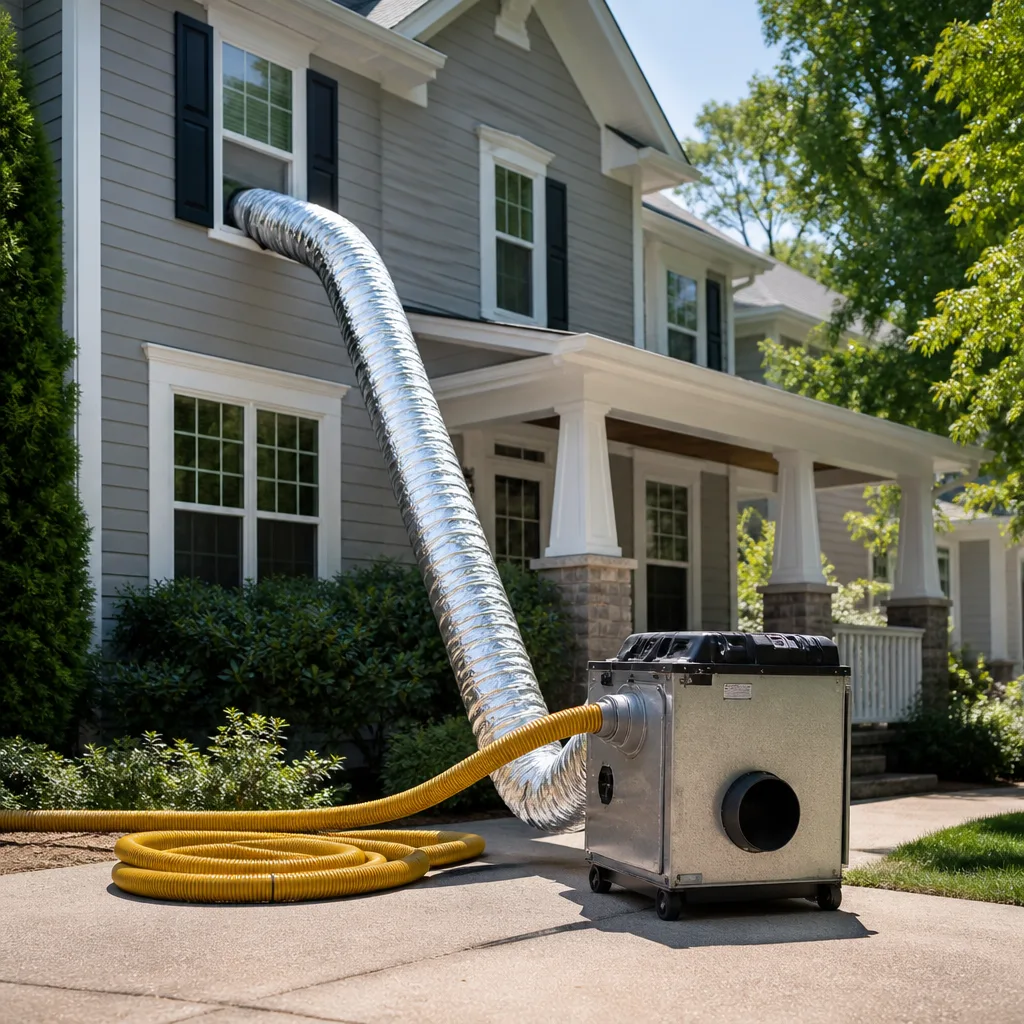
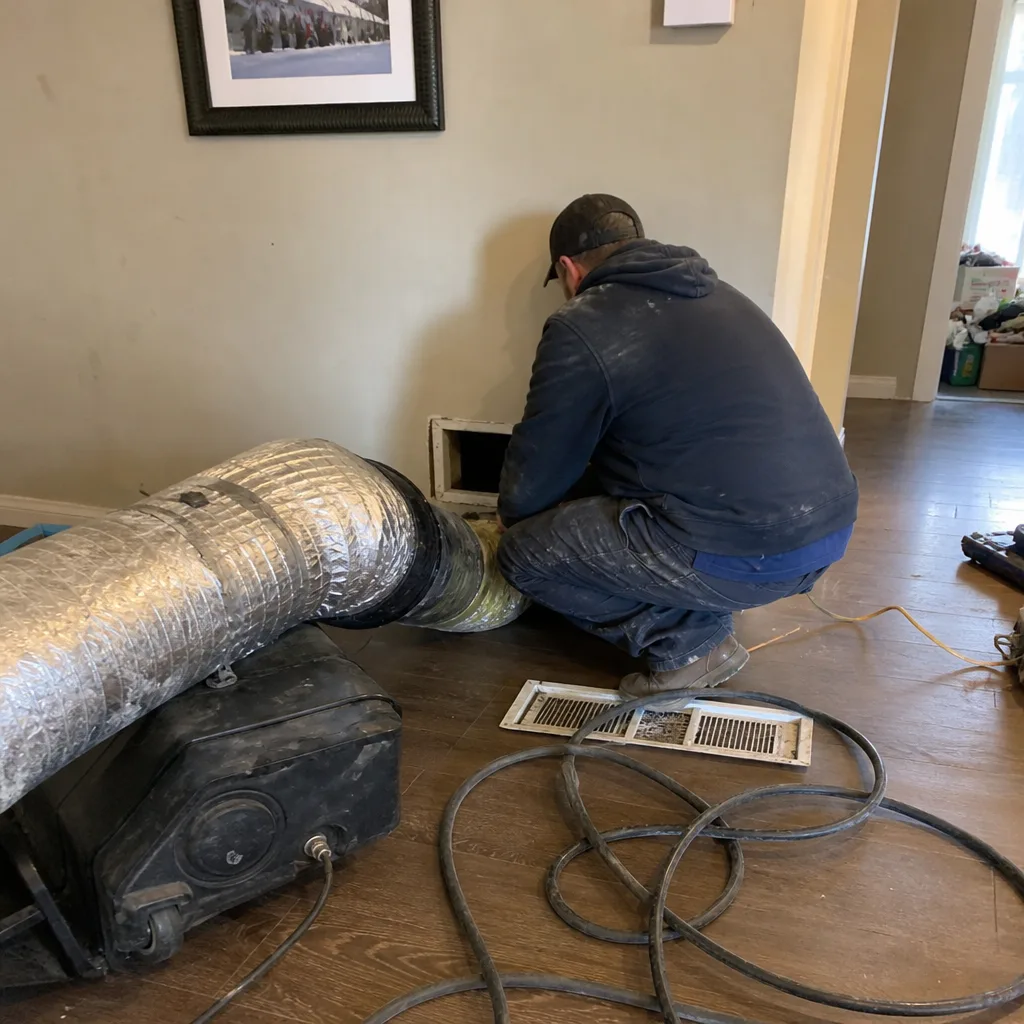
- Negative-pressure setup. A high-volume vacuum connects to the main trunk with the supply registers sealed. This keeps the system under negative pressure so loosened debris travels to the collection unit instead of into your living room. This is the step that makes the runtime long: it can’t be rushed.
- Mechanical agitation. This is where the source-removal actually happens. Compressed air whips and rotary brushes, run through a professional Rotobrush, break the settled layer off the duct walls so it can be pulled out. A vacuum alone leaves that bonded layer behind, which is why you can clean a duct system with a shop vac and see no real change.
- Debris extraction. The collected material goes into the vacuum’s filtration stage. On the job we run Abatement Technologies air-filtration equipment to actively capture dislodged contaminants inside the home, so the air stays usable while the work is in progress.
- Sanitizing treatment. An antimicrobial application follows cleaning, not replaces it. Sanitizer on top of undisturbed dust seals the dirt in place. It only makes sense after extraction.
- Filter replacement. A fresh filter goes in before the system is restarted. Some quotes include it, some add it separately. Ask which.
- Report and photos. Before-and-after photographs of your own ducts, plus a written summary of what was found. This is the verification step, and it’s the one you should never accept as optional.
If an invoice lists “duct cleaning” as one line and nothing else, you have no way to tell which of those steps were performed. Ask for the breakdown in writing before you book.
Kirkland Market Rates for 2026: Home Size, Duct Material and System Complexity
Pricing a duct cleaning is closer to pricing a roofing job than a car wash. Every home is a different system, so a shop that publishes one flat number for every address is either quoting a scope too narrow to matter or planning to change the number later. Here are the typical estimated ranges we see for the Kirkland market, kept as ranges because the written estimate is what sets your price.
- Small home, single system, light buildup: roughly $250 to $400
- Standard 1,500 to 2,500 square foot home, single HVAC system: roughly $350 to $700
- Larger home or two HVAC systems: roughly $600 to $900
- Heavy buildup, post-renovation debris, or a system that’s never been serviced: add meaningful cost for extra runtime and filtration
- Duct repair or sealing discovered during inspection: priced separately once the scope is known
Three things move the number most. Duct material matters: rigid metal cleans predictably, while flexible duct runs, common in remodels and additions around Kirkland neighborhoods like Rose Hill and Juanita, need gentler agitation and sometimes replacement rather than cleaning. System count matters: a house with two air handlers takes roughly twice the runtime. And access matters: a crawlspace or a tight attic run adds setup time that a straightforward basement trunk doesn’t.
Kirkland’s climate adds one more variable. Our wet winters and shoulder seasons mean heat pumps and furnaces cycle in ways that pull more moisture-laden outside air through the system than a drier climate would. If you’ve noticed mustiness on first heat in the fall, that’s a sign of buildup you’ll want inspected, not a reason to reach for a stronger filter.
Legitimate Add-Ons vs. Upsells You Should Question
Some add-ons are real work priced fairly. Others are pressure tactics wearing a line item. Here’s how to sort them.
Dryer vent cleaning: legitimate. This is separate work on a separate system, and it addresses a documented leading cause of residential fires. Lint accumulation in a vent run restricts airflow and creates a real hazard. We treat dryer vent cleaning as a core service for that reason, and it belongs on a quote as its own line.
UV light installation: evaluate separately. UV systems have their place, particularly in homes with persistent moisture or allergy concerns. But they’re an air-quality upgrade, not part of a cleaning job, and the decision should follow a conversation about what the system actually needs. If a technician is pushing a UV light before the ducts are even cleaned, ask why. We work with Honeywell and Aprilaire product lines for post-cleaning air-quality improvements, and we’ll tell you plainly when one makes sense for your home and when it doesn’t.
“Mold treatment” without a positive test: flag it. Antimicrobial sanitizing is a normal part of a professional cleaning, and we include Guardsman-grade protective treatments as part of the sanitizing scope. But an invoice that charges a separate premium for “mold remediation” without a lab result naming mold is selling a diagnosis, not a treatment. Ask for the test. A legitimate provider won’t hesitate.
Duct sealing: legitimate, and often the most valuable item on the list. Cleaning a system and leaving leaks in the trunk line is like mopping a floor with a window open. We repair what we find, not just clean around it. If a technician finds disconnected runs or failed joints during inspection, that’s real information, not a sales script.
How to Get Three Quotes That Actually Measure the Same Job
Three quotes only help if all three are pricing the same scope. Otherwise you’re comparing a full-system clean against a surface pass, and the cheaper number wins for the wrong reason. Here is what to request from every company, in writing, so the comparison is apples to apples:
- Whether the price is per system or per vent, stated clearly.
- The number of HVAC systems and registers the quote covers.
- The equipment they’ll use for negative pressure and agitation, by name or platform.
- Whether filtration equipment runs during the job to protect the indoor air.
- Whether sanitizing is included or billed separately.
- Whether filter replacement is part of the job.
- Whether they inspect for leaks and disconnected runs, and how they handle what they find.
- Whether you’ll receive before-and-after photos of your own ducts.
- What the final invoice guarantee is: a fixed agreed price, or an estimate subject to change.
Ask for a written, itemized estimate, not a phone number. Ask what happens if the technician finds a problem mid-job. Then compare the answers side by side. In our experience, the quotes that look expensive at the top turn out to be the ones that don’t move.
Why Equipment Choice Shows Up in the Price
Two jobs can look identical on paper and cost very different amounts to actually perform. The difference is what runs in the driveway. Professional air duct cleaning relies on high-volume negative-pressure units and rotary agitation tools. Those machines cost real money, weigh real weight, and demand a crew that knows how to run them without damaging flexible duct. A rental vacuum hooked up to a register is a different job entirely, and it leaves the bonded layer of dust right where it was.
We run professional Rotobrush and Nikro systems, the same equipment platforms commercial HVAC contractors use, plus Abatement Technologies air-filtration equipment to capture contaminants during service. That’s what the top end of a legitimate quote is paying for. Our technicians have up to 9 years of experience running these systems, and a proper job on a standard home takes hours of runtime, not a quick pass.
When a quote comes in dramatically lower than the others, the first question to ask isn’t “how do they do it so cheap?” It’s “what equipment are they bringing?” The answer usually explains the price.
What Makes a Kirkland Home’s Duct System Different
Homes in Kirkland span a wide range. Older houses in neighborhoods like Market and Norkirk were built with layouts and duct configurations that predate modern energy codes, which means more opportunity for leaky joints, undersized returns and runs that wander through unconditioned attic space. Newer construction and remodels around Bridle Trails and the Houghton area often use flexible duct runs, which are efficient to install and demand a careful touch during cleaning.
The climate compounds both. Cool, damp winters and mild summers mean the system spends months pulling moist outside air through the return. That moisture settles on the coolest metal surfaces and encourages dust to bond to duct walls in a way it doesn’t in drier regions. If your home has pets, or you’ve finished a renovation in the last year, the settled load climbs faster. Renovation dust is especially fine, and it travels through every open connection in the system. We routinely find visible drywall dust in return plenum boxes months after a remodel.
That’s also why a full-scope visit makes sense here. Our HVAC cleaning covers the components around the ducts too, since a clean duct network pulling air through a dusty blower compartment and evaporator coil isn’t clean for long. Covers every air pathway from intake to exhaust, one company.
How Do I Know the Work Was Actually Done?
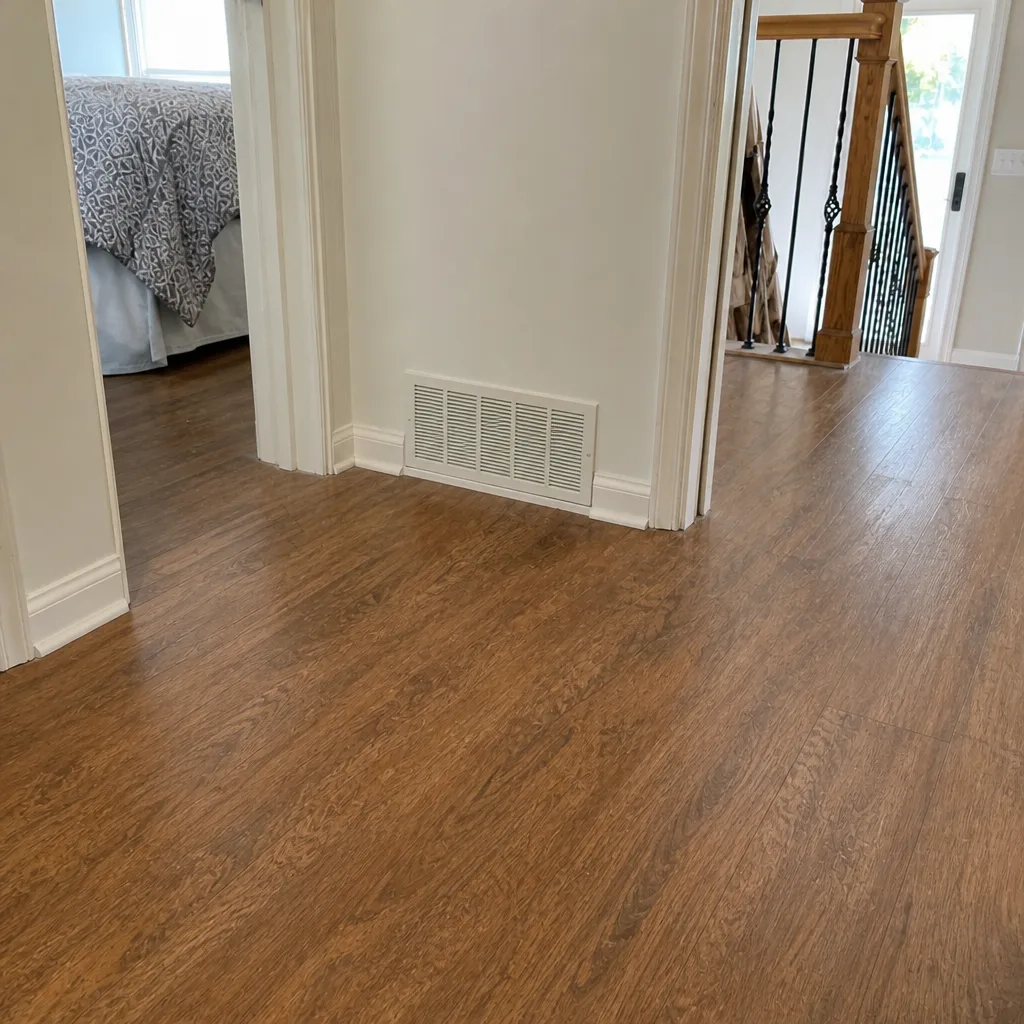
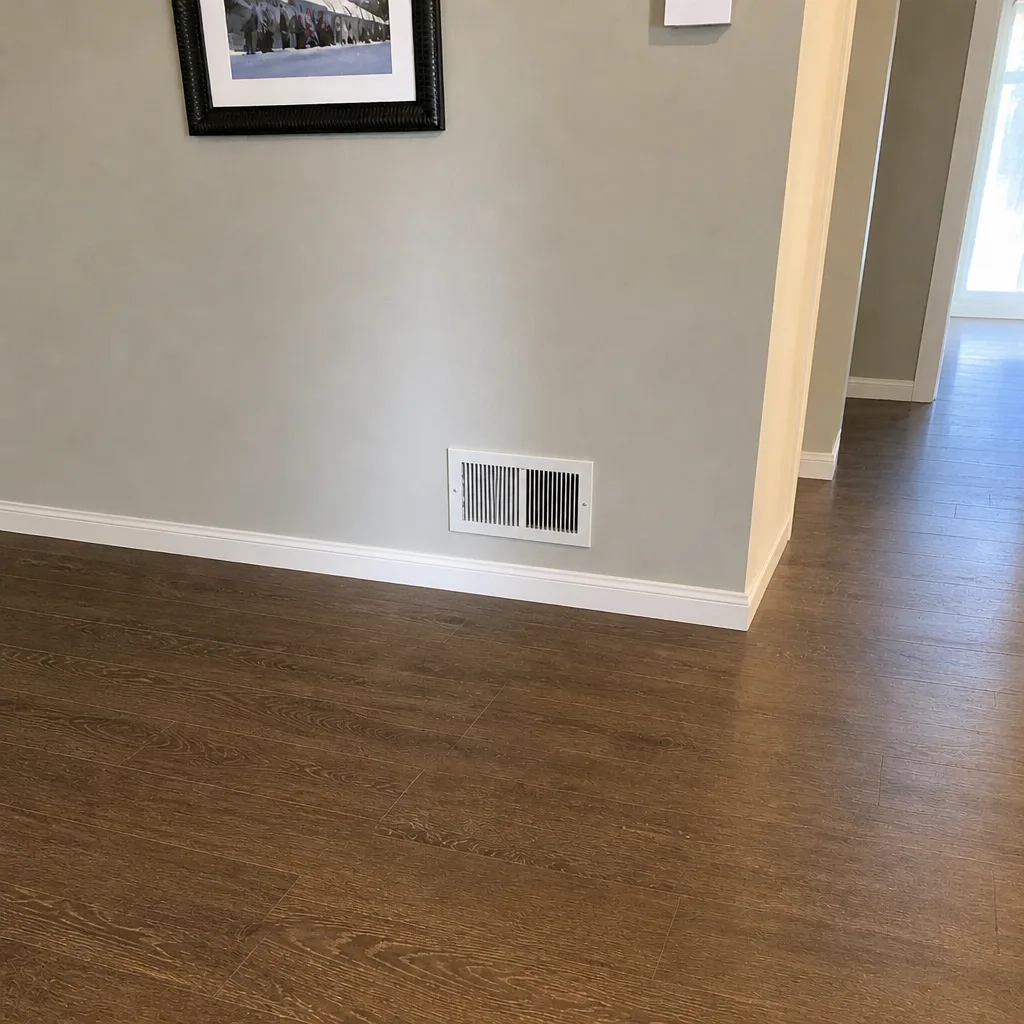
You know the work was done when you have before-and-after photographs of your own ducts, a written summary of what was found, and an invoice that matches the scope you agreed to. That’s the entire verification standard, and it’s the reason we build it into every job.
Photos matter because duct cleaning is invisible work. Nobody can see inside a trunk line after the crew drives away. Any provider that doesn’t hand you images of your own system is asking you to trust a receipt. A written summary matters for a different reason: it tells you what condition the system is in, which is information you’ll want the next time you think about cleaning.
The invoice itself is a document worth reading line by line. It should reflect the original estimate without surprise additions. If the number moved, the reasoning should be something you discussed with the technician before any extra work started. From intake to exhaust, that’s how a legitimate job closes out: one flat price per system, agreed up front, with the evidence in your hand.
Common Mistakes to Avoid
- Booking based on a coupon price. A teaser rate that materializes as a much larger invoice on-site is the industry’s most common complaint, and Kirkland homeowners are not immune. Ask for the written, itemized estimate before you book anything.
- Assuming a bigger filter means a cleaner system. A thick HVAC filter traps more particles, but it does nothing for dust already settled in the ducts. Cleaning and filtration solve different problems.
- Accepting sanitizing without cleaning first. Applying an antimicrobial to a dust-coated duct seals the buildup in place. Cleaning is the extraction step, sanitizing is the finishing step, and the order can’t be reversed.
- Skipping the dryer vent because “it’s separate.” It’s the single biggest fire risk most homes ignore. Lint buildup in a restricted vent run is a fire hazard regardless of how clean the HVAC ducts are.
- Hiring on price alone when your household has allergy sufferers or pets. The settled dust load in a home with pets and young children justifies the top end of the range, not the bottom.
- Leaving out duct repair findings because they weren’t in the original quote. A tech who finds a disconnected run during inspection has found real air loss. Ignoring it means paying twice.
- Not asking for photos. Duct cleaning is invisible work. Before-and-after images of your own ducts are the only verification that has weight.
See the difference
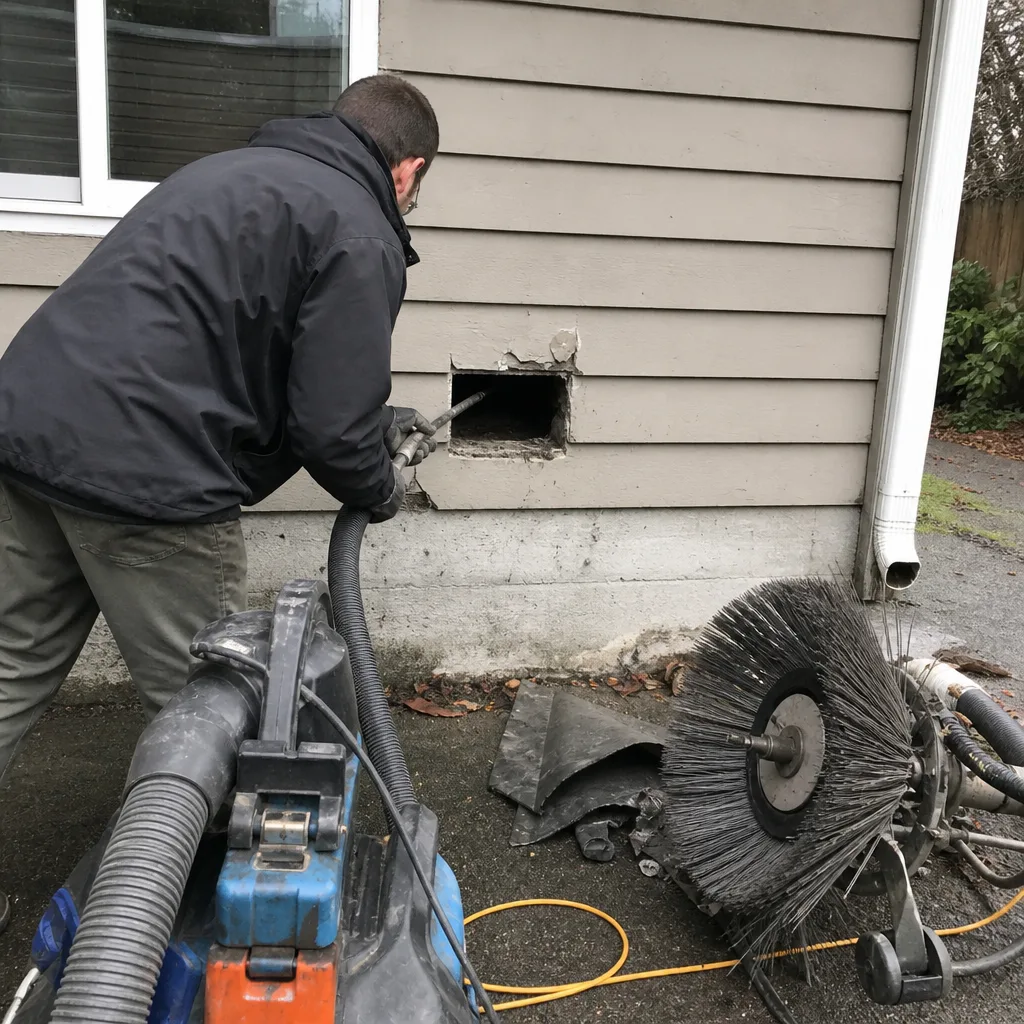 Before
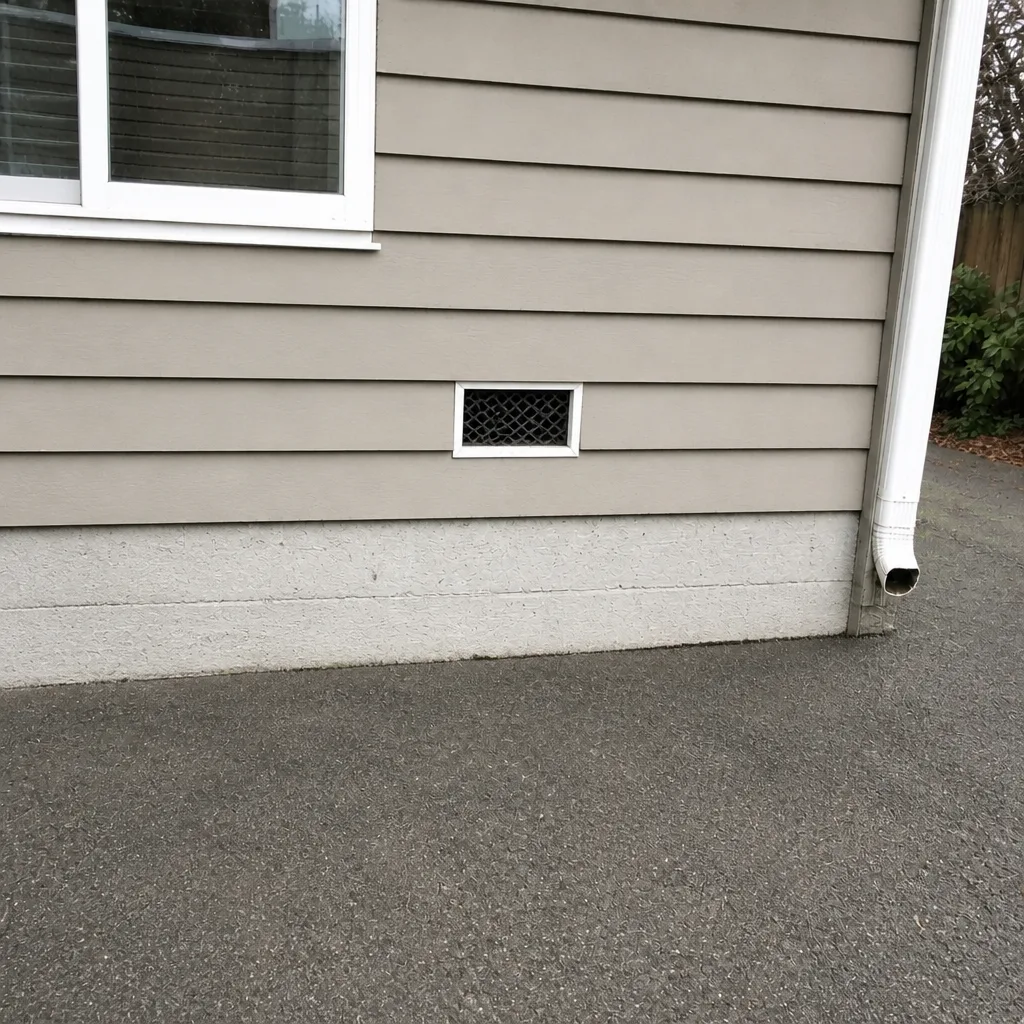 After
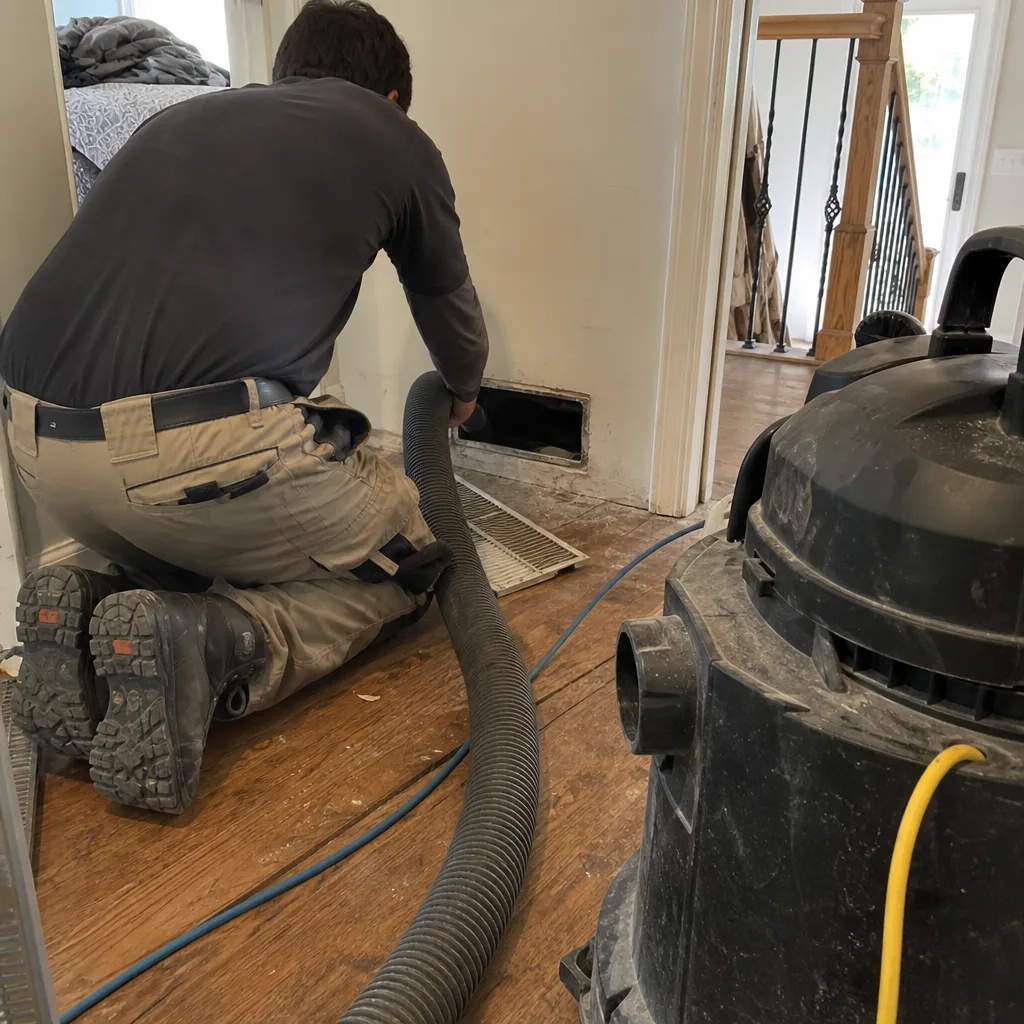 Before
 After
 Before
 After
When to Call a Professional
Call a professional when the signs point to a system problem that needs eyes inside the ducts and not just a filter change. That means visible dust puffing out of supply registers when the heat kicks on, musty smells that appear the first week you run the furnace in fall, a recent renovation, a system that’s never been serviced, or an unexplained jump in the household’s allergy load. Persistent moisture or a suspected dryer vent issue belongs on that list too. High-volume pressure equipment and rotary agitation tools aren’t consumer tools; attempting a DIY pass with a shop vac agitates debris into living spaces without extracting it, which can make indoor air quality worse. From cleaning and sanitizing to duct repair and sealing, this is one of the few places a Kirkland provider can cover the whole job. Kirkland Air Duct Cleaning Pros offers free estimates in Kirkland. Call (833) 509-3011. We answer 24/7. Fast dispatch from 7am to 7pm, Sunday through Friday.
Frequently Asked Questions
Expect roughly $350 to $700 for a standard single-system home in Kirkland in 2026, with larger homes and multi-system properties ranging from $600 to $900 or more. The written estimate is what sets your paid price, so comparisons should always be on whole-system figures, never per-vent quotes. Call (833) 509-3011 for an exact quote – estimates are free.
Cheap quotes usually reflect a narrower scope, consumer-grade or rental equipment, or a price that is designed to expand once the technician arrives on-site. A proper job requires hours of equipment runtime with professional negative-pressure and agitation systems. A quote that undercuts the market by more than half is worth questioning before you book. Call (833) 509-3011 for an exact quote – estimates are free.
Most homes in Kirkland benefit from professional cleaning every three to five years, though households with pets, allergy sufferers, young children or recent renovations often need it sooner. Homes that have never had professional service should be inspected regardless of age. If you’re unsure, an inspection is the starting point, not a full cleaning. Call (833) 509-3011 for an exact quote – estimates are free.
No, and often you shouldn’t. A provider that cleans and seals in the same visit addresses the root cause of air loss rather than just the surface buildup. That’s why we offer cleaning, repair, sealing, sanitizing and dryer vent service under one roof, with no subcontracting or referrals to coordinate. Call (833) 509-3011 for an exact quote – estimates are free.
Sometimes. UV and whole-home air quality systems from Honeywell and Aprilaire help in specific situations: persistent moisture, allergy concerns, or a system that needs filtration upgrades. They should be evaluated as their own decision after the duct cleaning, not as a bundled add-on pushed during the visit. Call (833) 509-3011 for an exact quote – estimates are free.
Before-and-after photographs of your own ducts, plus a written report summarizing what was found and treated. Any legitimate provider can supply both. If a crew finishes and hands you only an invoice, that’s not verification. Call (833) 509-3011 for an exact quote – estimates are free.
The Bottom Line
Air duct cleaning in Kirkland isn’t priced by the hour or the vent. It’s priced by the scope of a real job: inspection, negative-pressure setup, mechanical agitation with professional equipment, extraction, sanitizing, filter replacement and a documented report. Our technicians have up to 9 years of experience, and we work with Rotobrush, Nikro and Abatement Technologies equipment because consumer tools leave the settled layer where it was. Legitimate 2026 ranges start around $350 for a standard home and top $800 for larger systems or heavy buildup. The written estimate sets the final price. Everything else is a comparison that’s missing pieces. Start with the itemized quote, ask for photos, and treat any add-on that charges more than a tested problem is worth as a reason to slow down.
Ready for an itemized estimate? Call Kirkland Air Duct Cleaning Pros at (833) 509-3011. We answer 24/7. Fast dispatch from 7am to 7pm, Sunday through Friday. Visit Kirkland Air Duct Cleaning Pros to see the full service scope before you book.
Written by the team at Kirkland Air Duct Cleaning Pros.